Plan Change 120: What It Means for Your Central Auckland Property
By Sarah & Julie – Harcourts | Auckland Real Estate Agents | Selling Auckland-Wide. Licensed under the REAA 2008.
If you own a home in Central Auckland, there’s a good chance your street just moved a little closer to — or further from — a very different future, and it happened quietly over the past twelve months through a planning process most owners have never heard of. Understanding Plan Change 120 matters for your Central Auckland property, because it’s quietly setting the ceiling on what your land could be worth.
Plan Change 120 and Your Central Auckland Property: The Short Version
Plan Change 120 (PC120) is Auckland Council’s biggest rewrite of housing rules since the Auckland Unitary Plan came into force in 2016. It’s been notified, submitted on, reshaped by new legislation, and — just recently — approved in revised form for a fresh round of public consultation.
- Most of Auckland stays the same – around 85% of the city stays under the existing 2016 rules. Only a defined band is getting the big upzoning treatment.
- Near the CBD and rapid transit – if you’re within 10km of the CBD and near rapid transit, you’re in the zone that keeps the biggest height gains.
- Further out – the upzoning many owners were banking on has largely been pulled back, with most sites reverting to familiar 2016 rules.
- Hazard overlays are the wildcard – flood, landslide and coastal overlays are now the real variable, and some already apply to consent applications today.
- Timing – a new public submission window opens late August 2026, with final decisions not expected until mid-2027.
Why This Started: Floods, Then a Change of Direction
PC120 exists because its predecessor, Plan Change 78, ran into two problems. The 2023 Anniversary Weekend floods exposed how much of the proposed intensification sat in areas prone to flooding. Then central government made the old blanket density rules optional for councils, and gave Auckland the tools to take a more targeted approach. Council withdrew most of PC78 and notified PC120 in its place in November 2025.
In April 2026, new legislation cut Auckland’s mandatory housing capacity target from roughly two million homes down to about 1.4 million. With a lower bar to clear, Council no longer needed to upzone anywhere near as broadly — so it refocused the plan around a simpler idea: concentrate density where transport and water infrastructure already exists, and pull it back almost everywhere else. That refocusing was signed off on 21 July 2026.
If You Own Property Near the City Rail Link
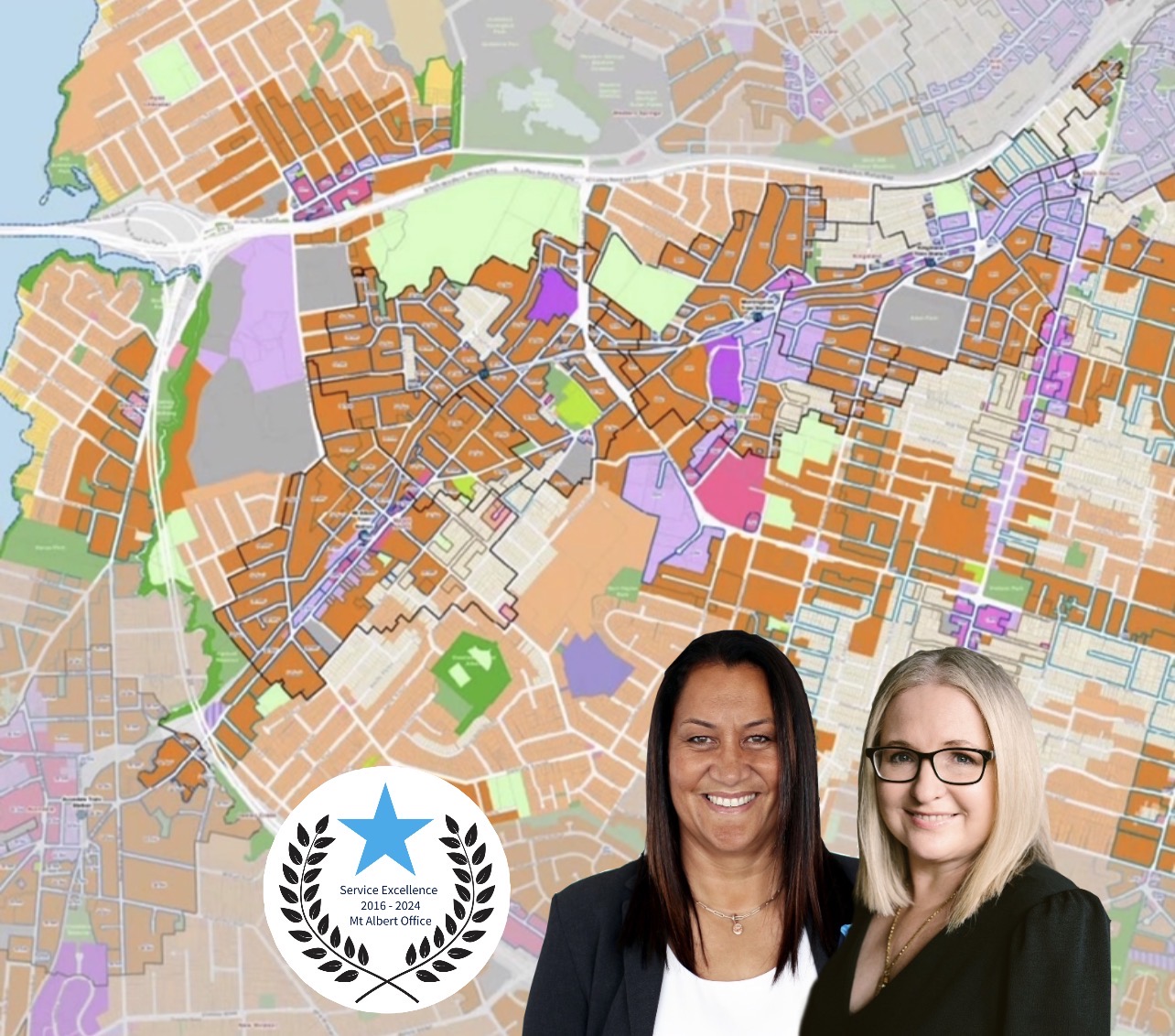
Here’s the part that matters most for many of our vendors and buyers. The suburbs around the Western Line stations of the City Rail Link — Maungawhau, Kingsland, Morningside, Mt Albert and Baldwin Ave — keep some of the most generous height allowances anywhere in Auckland, with 10 to 15 storeys permitted in these catchments. Council’s own language frames it as a genuine compromise, and for owners in these pockets, it’s a vote of confidence: this is where the growth, the infrastructure spend and the developer interest are likely to keep concentrating.
“If your section sits inside one of these walkable catchments, it’s worth an honest conversation about what it could mean — whether that’s holding for future value, exploring a development opportunity, or simply understanding why buyer interest in your street may be about to shift.” — Sarah
If you’re curious where you stand, our What is My Home Worth conversation is a calm place to start.
If You’re Further Out
If your property is beyond that roughly 10km ring, or near a smaller local centre or bus corridor rather than rapid transit, the upzoning many owners were expecting has largely been removed from the plan. Places like Blockhouse Bay and Grey Lynn’s smaller local centres, for example, revert to the existing 2016 rules rather than gaining extra height.
If your sense of what your land was worth was built on “future development potential” under the earlier, broader version of PC120, it’s worth revisiting that assumption against the current, scaled-back proposal. Our What to Consider When Selling page walks through some of these questions.
The Overlay That Could Matter More Than Your Zone
This is the change we think gets talked about the least — and the one most likely to catch an owner off guard. Natural hazard overlays for flooding, landslide risk and coastal erosion are being tightened, and in some vulnerable areas further downzoning is proposed on top. Crucially, some of these hazard rules already carry legal weight for resource consent applications today, well ahead of the plan being finalised.
In practical terms, a site’s hazard status can now be more decisive for value and development potential than the zone printed next to it. If you’re weighing up a sale or a subdivision, it’s worth checking both the operative Unitary Plan and the proposed PC120 layers side by side before making any decisions.
What To Do Next
- Check your specific address – look at the proposed zone, height limits, and any hazard overlays.
- Near a CRL station or town centre – talk to us about what the retained height provisions could mean for your appeal to buyers and developers.
- Outside the growth corridors – don’t assume “future upzoning” is still part of your property’s story; the current plan has scaled that back.
- Watch the dates – keep an eye on the submission window opening late August 2026 if you want your voice heard before decisions in mid-2027.
The Takeaway
Planning changes like this move slowly until, suddenly, they don’t — and by the time a rule change shows up in a valuation or a buyer’s due diligence, it’s often too late to plan around it. The good news is that a little understanding now removes a lot of stress later. Whether you’re near a station or further out, knowing where your property sits under PC120 puts you in a calm, confident position. If you’re only thinking of selling, this is exactly the kind of thing worth understanding early.
This article is general commentary, not planning or legal advice — for anything development-related, we’d always recommend talking to a licensed planner or surveyor as well.
Frequently Asked Questions
When does the next Plan Change 120 submission window open?
A new public submission window opens late August 2026, with final decisions not expected until mid-2027.
Which Central Auckland suburbs keep the biggest height allowances?
The suburbs around the Western Line City Rail Link stations — Maungawhau, Kingsland, Morningside, Mt Albert and Baldwin Ave — keep some of the most generous allowances, with 10 to 15 storeys permitted in these catchments.
Could a hazard overlay affect my property more than my zone?
Yes. Flood, landslide and coastal overlays are being tightened, and some already carry legal weight for consent applications today — so a site’s hazard status can be more decisive for value than the zone next to it.
Do you want a straight answer for your street?
If you’d like to understand exactly how PC120 affects your specific Central Auckland property, get in touch for a chat. We know these streets station by station — no pressure, no obligation, just a good honest chat.